IV sedation dentistry is used to support patients who are unable to tolerate dental treatment due to anxiety, fear, or previous negative experiences.
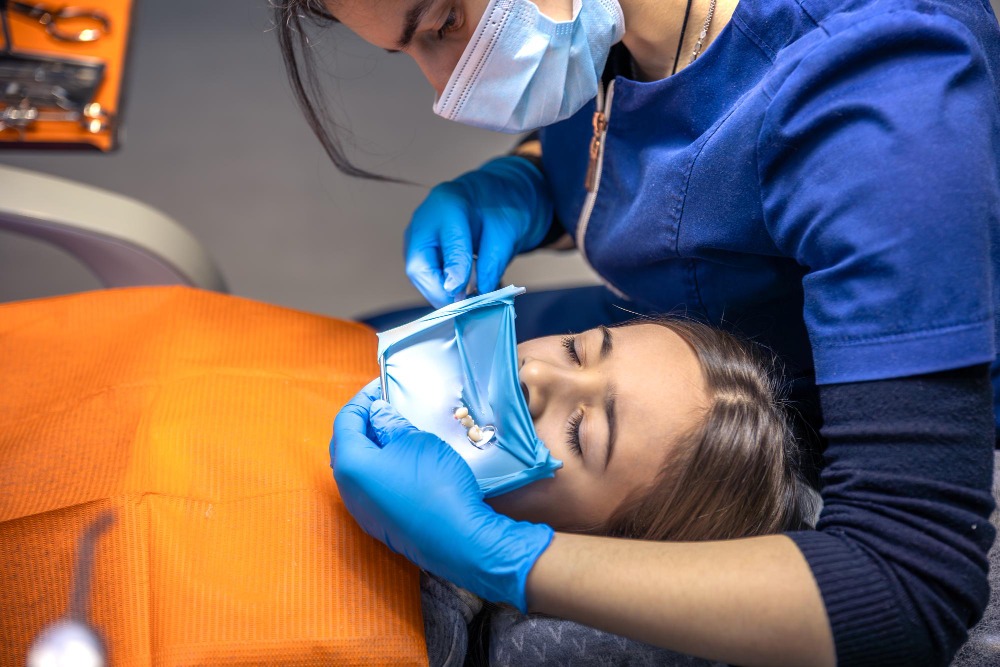
It allows dental treatment to be carried out while the patient is in a deeply relaxed state, without being unconscious.
IV sedation involves administering a sedative medication through a vein, usually in the arm or hand.
The medication produces a controlled state of deep relaxation. Patients:
The depth of sedation is adjusted individually and monitored throughout treatment.
IV sedation may be appropriate for patients who:
Sedation is not provided routinely and is used only where clinically appropriate.
IV sedation is provided in a controlled clinical environment with continuous monitoring.
Before sedation can be offered, a paid clinical consultation with Dr Frances Carling-Thom is required. This includes:
Review of medical history and medications
Assessment of dental needs
Discussion of risks and benefits
Confirmation of suitability for sedation
Sedation is not assessed or approved during free, non-clinical consultations.
On the day of sedation treatment:
Patients must not drive, work, or make important decisions for the remainder of the day.
Written aftercare instructions are provided.